What Your Dog’s Body Language Is Telling Us During Daycare
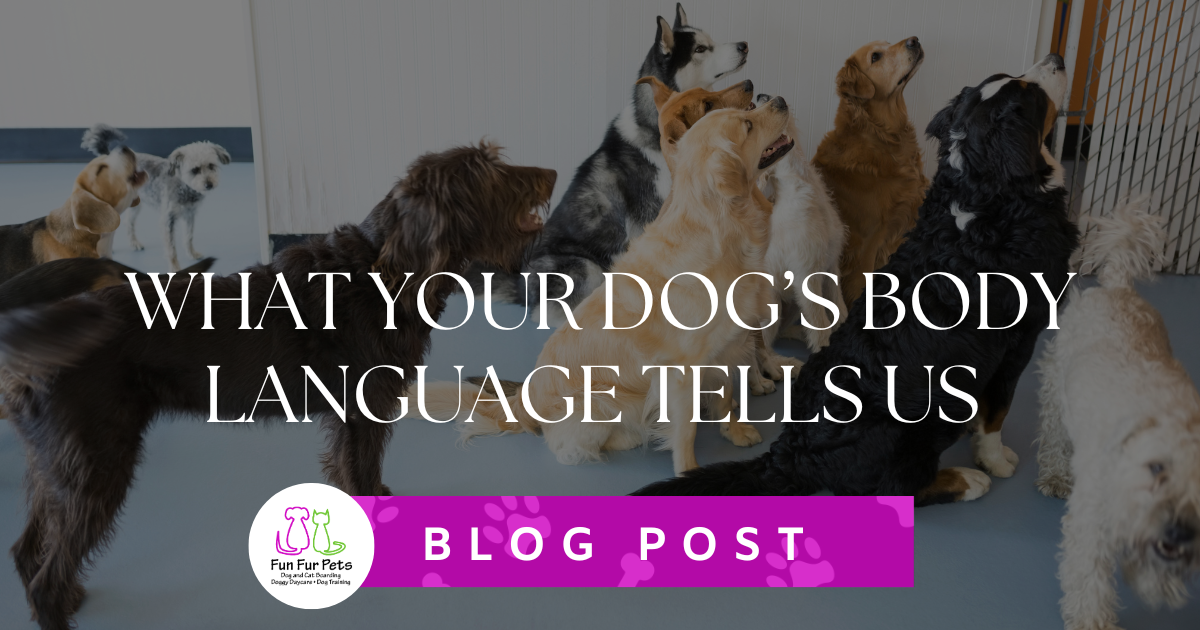
Dogs may not speak our language, but they communicate constantly — with their posture, their eyes, their tails, their movement, and even their breathing. At daycare, reading this body language is one of the most important parts of keeping dogs safe, happy, and comfortable.
Pet parents often see the fun photos and videos from daycare, but behind the scenes, our staff is watching dozens of subtle signals that tell us how each dog is feeling throughout the day. Understanding these cues helps us support shy dogs, guide energetic dogs, and make sure every pup has a positive experience.
Here’s a look at what your dog’s body language tells us — and how we use that information to care for them.
Why Body Language Matters in Group‑Care Settings
Dogs use body language to express:
- Excitement
- Curiosity
- Uncertainty
- Stress
- Fatigue
- Over‑arousal
- Desire for space
- Desire for interaction
In a busy environment, these signals help us understand when a dog is having a great time — and when they need a break, a buddy change, or a quieter space.
Happy, Comfortable Body Language
When your dog is relaxed and enjoying themselves, you’ll see:
Loose, wiggly movement
Soft curves in the body, relaxed muscles, and bouncy steps.
Play bows
Front end down, back end up — the universal “let’s play!” signal.
Soft eyes and relaxed ears
No tension, no hard staring, no pinning back.
Open mouth with relaxed tongue
A natural, easy pant — not frantic or tight.
Reciprocal play
Taking turns chasing, wrestling, or pausing together.
These are the dogs who are in their social sweet spot — confident, playful, and emotionally regulated.
Signs Your Dog Is Getting Tired or Overwhelmed
Even the friendliest dogs can hit a point where they need a breather. We watch for early signs like:
Lip licking or yawning
These are classic “I need a moment” signals.
Turning the head away
A polite way of saying, “I’m not sure about this.”
Seeking space or staying close to staff
A dog who needs reassurance or a break.
Slower movement or hesitation
A sign they’re processing or feeling unsure.
Sudden stillness
A pause that’s more about tension than rest.
When we see these cues, we adjust the environment to help your dog feel safe and supported.
Signs of Rising Arousal (Before It Becomes Too Much)
Arousal isn’t bad — it’s part of play. But when it climbs too high, dogs can lose the ability to make good social decisions.
We watch for:
Faster, more intense movement
Play that shifts from bouncy to frantic.
Mounting or repeated chasing
Often a sign a dog is getting too amped up.
Hard eyes or stiff posture
A dog who’s no longer fully relaxed.
Ignoring social cues
Not responding when another dog says “enough.”
Escalating vocalizations
Barking that becomes repetitive or sharp.
These signals tell us it’s time to step in with a reset, a redirection, or a rest break.
How We Use Body Language to Support Your Dog
1. We match dogs based on play style
Some dogs love wrestling. Others prefer gentle chase. Some like to observe first. Body language helps us pair dogs who complement each other.
2. We intervene early — before stress builds
A simple redirection, a treat scatter, or a short break can prevent overwhelm.
3. We provide rest when dogs show fatigue
Dogs don’t always know when to stop. We help them regulate.
4. We adjust the environment
If a dog needs more space, a calmer buddy, or a quieter area, we make it happen.
5. We support shy or sensitive dogs
Body language tells us when a dog needs reassurance, slower introductions, or a confidence‑building activity.
What This Means for You and Your Dog
Your dog’s body language is their voice — and we listen closely.
By watching these signals throughout the day, we can:
- Keep playgroups safe
- Support shy or nervous dogs
- Prevent overstimulation
- Encourage positive social interactions
- Make sure your dog goes home happy, tired, and emotionally balanced
Every wiggle, bow, pause, or glance tells us something — and we use that information to give your dog the best possible daycare experience.